Mar 26
17
You want a clear TV signal, but your home has no chimney. That used to feel like a problem. It isn’t anymore. You still have plenty of ways to get a strong Freeview reception, and in many cases, you can get results just as good, sometimes better.
You don’t need to follow old methods. You just need the right placement, the right setup, and a bit of understanding of how the signal actually works. Once you get that right, everything else becomes simple.
Why Installing a TV Aerial Without a Chimney Is More Common Than You Think
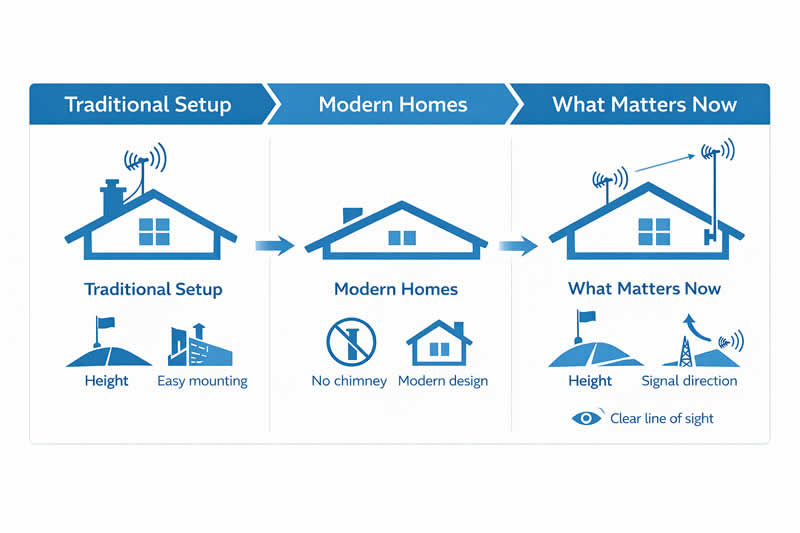
You’re not alone here. More homes now are built without chimneys, and even older properties are losing them. The way aerials get installed has changed with that.
Why were chimneys traditionally used for aerials?
You used to see aerials fixed to chimneys because they gave easy height. Height helps signal. Chimneys also sit at the highest part of a house, so they became the go-to spot. Installers could secure a lashing kit and mount quickly without drilling.
It was simple, visible, and effective.
Why modern homes often don’t have chimneys
New builds often skip chimneys completely. Heating systems have changed. Space design has changed. Rooflines are cleaner. That means no obvious mounting point at the top.
Even older homes now remove unused chimneys, especially during renovations.
What actually matters more than a chimney (height, signal, direction)
You don’t need a chimney. You need three things:
- Height where possible
- Clear line of sight towards the transmitter
- Correct aerial direction
If you get those right, the chimney becomes irrelevant. You can mount almost anywhere that gives you those conditions.
Can You Install a TV Aerial Without a Chimney? (Quick Answer First)
You want a straight answer before you go any further.
Yes — and in many cases it works just as well
You can install a TV aerial without a chimney, and most people now do exactly that. With the right positioning, you won’t notice any difference in signal quality.
Modern brackets, poles, and mounts make it easier than before.
When a chimney would normally be preferred
A chimney still helps when:
- The signal is weak in your area
- You need maximum height
- Roof access is limited
It’s not essential. It’s just convenient in some situations.
When alternative mounting options are better
Other mounting options often work better when:
- You want a cleaner look
- You need easier access for maintenance
- Your chimney is unstable or has been removed
- You want a more secure fixing
You’re not limited. You just need to choose the right option for your home.
Key Factors That Affect Your Signal (Before Choosing a Location)
Before you install anything, you need to understand what affects your reception. This step saves you time and avoids frustration.
Line of sight to the transmitter
Your aerial needs to “see” the transmitter. That doesn’t mean perfect visibility, but fewer obstacles always help.
Trees, buildings, and hills can weaken the signal. The clearer the path, the stronger the reception.
Height vs obstruction trade-offs
Higher usually helps. But not always.
If a slightly lower position avoids a large obstruction, that lower spot may give a better signal. You’re balancing height against interference.
Urban vs rural signal differences
In built-up areas, the signal reflects off buildings. That can help or harm, depending on the direction.
In rural areas, you often need more height and a stronger aerial because the signal travels further and is weaker.
Weather, interference, and building materials
Heavy rain, wind, and even roof materials affect the signal. Foil insulation in lofts can block reception. Electrical devices can cause interference.
You’re working with a mix of factors, not just one.
Best Places to Install a TV Aerial Without a Chimney
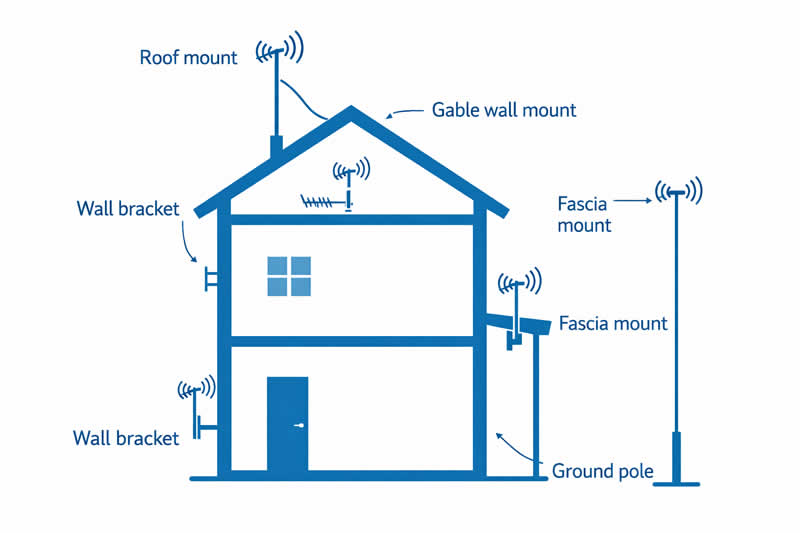
This is where most people focus. You want the best position, not just any position.
Roof installations (highest alternative option)
Mounting on the roof gives you height close to what a chimney would offer. You fix a bracket to the roof structure and extend a mast.
This option works well in weak signal areas. It also keeps the aerial clear of most obstructions.
Gable end wall mounting (best balance of height and stability)
A gable wall sits high and gives a solid fixing point. You drill into the brickwork and secure a bracket.
This is one of the most reliable setups. You get good height and strong stability.
Wall brackets (front or rear of property)
You can mount directly to an external wall using brackets. This works well when the signal is strong enough.
It’s easier to install and maintain. It’s also less intrusive visually.
Loft or attic installations (hidden but variable signal)
A loft installation keeps everything inside. You avoid weather exposure and external fittings.
But the signal can vary. Roof materials, insulation, and structure all affect performance.
Fascia mounting (practical but depends on strength)
You can fix it to the fascia board, usually near the roof edge. This is quick and accessible.
But you need strong boards. Weak fascia can move in the wind, which affects alignment.
Pole in the ground (for poor signal areas)
When the signal is poor, you may need a standalone pole fixed into the ground.
This gives height and flexibility in positioning. It’s often used when a building blocks the signal.
The Reality Most People Ignore About Aerial Placement
This is where expectations often don’t match results.
Why higher doesn’t always mean better
You might assume higher is always better. It isn’t.
If a higher puts you behind an obstruction or into more interference, you can lose signal. Placement matters more than height alone.
Why does every property get different results
Two houses on the same street can get different results.
Roof shape, nearby buildings, trees, and even wiring routes all affect performance. There’s no one-size solution.
Why trial and testing matter more than theory
You can plan, but testing tells you the truth.
Moving the aerial slightly can change the signal strength. Small adjustments make a big difference. Testing saves guesswork.
Choosing the Right Mounting Method for Your Property
Now you match the method to your home.
Brackets vs poles vs loft mounts
- Brackets suit most homes and provide stability
- Poles work when you need extra height or flexibility
- Loft mounts suit strong signal areas and hidden setups
You choose based on signal strength and access.
When to use heavy-duty vs standard fixings
Heavy-duty fixings help when:
- You install at height
- Wind exposure is high
- The mast is long
Standard fixings work for simpler installs.
Safety considerations for each method
You need to think about:
- Ladder safety
- Roof access risks
- Secure fixing points
- Electrical hazards
Safety matters more than speed.
Step-by-Step: How to Install a TV Aerial Without a Chimney
You don’t need to overcomplicate this. You just follow a clear process.
Check signal strength in different locations
Test several spots around your property. Try roof level, wall level, and loft space.
You want the strongest, most stable signal.
Choose the best mounting point
Pick the location that gives you the best signal and safe access.
Balance performance with practicality.
Secure the brackets and mast safely
Fix your bracket into a solid material. Brick or strong timber works best.
Ensure everything is tight and stable.
Align the aerial correctly
Point the aerial towards the transmitter.
Small adjustments matter. Take your time.
Run and connect the cable to your TV
Route the cable cleanly. Avoid sharp bends. Keep it away from interference sources.
Connect and tune your TV.
Tools and Equipment You’ll Need
You don’t need a huge list, just the right essentials.
Aerial type (Yagi, log-periodic, etc.)
Different aerials suit different signals. Yagi works well in strong areas. Log-periodic handles varied conditions better.
Mounting brackets and poles
Choose based on your installation point.
Cable, connectors, and clips
Good quality cable reduces signal loss. Secure it properly.
Signal meter (optional but useful)
A signal meter helps you fine-tune alignment. It saves time and improves accuracy.
Common Mistakes When Installing Without a Chimney
These mistakes cause most problems.
Mounting too low on the property
Lower positions often suffer from obstruction and interference.
Ignoring signal testing before fixing
Fixing first and testing later leads to rework.
Using weak or unsuitable brackets
Weak fixings move in the wind. Movement affects the signal.
Poor cable routing is causing signal loss
Long runs, sharp bends, or cheap cable reduce performance.
When a Loft Installation Works (And When It Doesn’t)
Loft installs appeal because they’re hidden. But they don’t always work.
Ideal conditions for loft aerials
Loft installs work when:
- The signal is strong in your area
- Roof materials don’t block the signal
- There’s minimal interference
Common issues (insulation, foil backing, interference)
Foil insulation blocks the signal. Thick roofing materials reduce strength. Electrical interference can disrupt reception.
How to test before committing
Place the aerial temporarily in the loft. Check signal strength. Move it around.
Only commit once you confirm stable reception.
Planning Permission & Legal Considerations (UK)
You usually won’t need permission, but there are exceptions.
When you don’t need permission
Most homes can install an aerial without approval, as long as it’s reasonable in size and placement.
Rules for listed buildings and conservation areas
If your home is listed or in a conservation area, you may need approval.
Check before you install.
Neighbour and visual impact considerations
Keep installations neat. Avoid intrusive placements. Good positioning keeps things simple.
How to Improve the Signal After Installation
If your signal isn’t perfect, you still have options.
Repositioning and fine-tuning direction
Small adjustments can improve the signal immediately.
Using amplifiers or boosters
Boosters help when the signal is weak, but they won’t fix poor placement.
Upgrading your aerial type
A better aerial can improve reception in difficult areas.
Reducing interference sources
Keep cables away from electrical devices. Avoid cluttered routes.
Professional vs DIY Installation: What’s Best?
You need to decide what works for you.
Pros and Cons of DIY vs Professional Installation
DIY Installation
- Pros: Lower cost, flexible timing, full control
- Cons: Safety risks, trial and error, possible weaker signal
Professional Installation
- Pros: Accurate alignment, safer install, stronger signal results
- Cons: Higher upfront cost, less flexibility on timing
When DIY is suitable
DIY works when:
- The signal is strong
- Access is easy
- You feel confident working at height
When to call a professional installer
Call a professional when:
- The signal is weak
- Access is difficult
- You want guaranteed performance
Cost vs long-term performance
Spending more up front often saves time and frustration later.
Final Thoughts: The Best Setup for Your Home
You don’t need a chimney to get a strong TV signal. You just need the right approach.
Quick recap of the best options
Roof mounts, gable walls, and solid brackets give reliable results. Loft installs work in the right conditions.
How to choose the right setup for your property type
Look at your signal, your structure, and your access. Match the method to those factors.
Why testing and positioning always win over assumptions
You don’t guess. You test. You adjust. You refine.
That’s how you get a clear picture and a setup that works long-term.