Feb 18
7
New build homes often look clean, modern and carefully designed, so it is understandable that homeowners do not always want a large TV aerial fixed in an obvious position. The challenge is that the most discreet option is not always the option that gives the best Freeview signal. Aerial placement has to balance appearance, reception quality, roof materials, nearby buildings, solar panels and the way the property has been built.
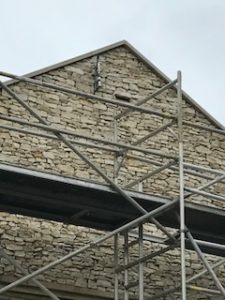
This installation was originally carried out on a new build property where the plan had been to fit the aerial in the loft. That would have kept everything hidden, but once our engineer arrived, it became clear that the roof construction made that unsuitable. The roof was clad with metal and also had solar panels, which meant there was no usable signal in the loft. The only practical solution was to fit a small external Freeview aerial in the most discreet position possible.
Why New Build Homes Often Need Careful Aerial Planning
New build properties can be more complicated than older homes when it comes to TV aerial installation. The roof space may look like the obvious place to hide an aerial, but modern roofing materials, insulation, solar panels, foil-backed membranes and metal cladding can all reduce or block signal. A loft aerial can work very well in some homes, but in others it may produce weak reception, missing channels or picture break-up.
That is why a signal test matters before deciding where the aerial should go. A discreet installation should not mean guessing. The aim is to find the smallest and neatest aerial position that still gives stable Freeview reception. Sometimes that means a loft aerial. Sometimes it means a small external aerial tucked away on a gable end, side wall, chimney, fascia area or another less visible position.
Why The Loft Was Not Suitable On This Property
The original design for this property allowed for the aerial to be fitted inside the loft. On paper, that made sense because it would have kept the aerial completely hidden. In practice, the roof materials caused a problem. Metal roof cladding can interfere with TV signals, and solar panels can add another layer of obstruction between the aerial and the transmitter.
When there is no usable signal in the loft, fitting an aerial there simply to keep it hidden is not a good solution. The customer may end up with a neat installation but poor reception. Channels may be missing, HD services may be unreliable, and the picture may break up during bad weather. In this case, an external aerial was the only sensible option.
Making An External Aerial Look Discreet
An external aerial does not have to dominate the appearance of a property. With the right equipment and positioning, it can be installed neatly and kept as unobtrusive as possible. On a new build, the installer should consider the roofline, wall colour, sightlines from the front of the property, cable routing and where the aerial will be least noticeable while still receiving a strong signal.
A discreet installation is not just about using a small aerial. It is also about how the cable is run, where the bracket is fixed, whether the aerial can be positioned away from the main frontage, and how visible it is from the driveway or street. A poorly routed cable can look worse than the aerial itself, so the finishing details matter.
Why Small Aerials Are Not Always The Right Answer
Many homeowners ask for the smallest aerial possible, especially on a new build property. That is understandable, but the smallest aerial is not always the best choice. If the signal is strong, a compact aerial may work perfectly well. If the signal is weak or blocked by roofing materials, trees, nearby buildings or the property’s own structure, a slightly larger or better-positioned aerial may be needed.
The right aerial should be chosen based on signal readings, not appearance alone. A professional installer can test the reception and advise whether a compact aerial will be reliable. The goal is to avoid fitting something that looks tidy on day one but causes reception problems later.
Solar Panels, Metal Roofs And Freeview Reception
Solar panels and metal roof materials can affect where a TV aerial should be installed. They do not automatically mean Freeview will not work, but they can make a loft installation less reliable. If the aerial is trying to receive a signal through layers of metal, panel framing or reflective materials, the reception can be heavily reduced.
In these situations, an external position usually gives the aerial a clearer path to the transmitter. The aerial can be aligned correctly, tested properly and positioned so that the signal is strong enough for everyday viewing. That is especially important if the property has multiple TV points or if the customer wants reliable access to the full Freeview channel list.
Do You Need Permission For A TV Aerial On A New Build?
Most homes can have a TV aerial installed without needing planning permission, but there can be exceptions. New build estates may have developer rules, restrictive covenants or design guidelines, especially if the property is in a carefully controlled development. Flats, leasehold properties and conservation areas may also have extra restrictions.
If appearance is a concern, it is worth checking the property paperwork or asking the developer before booking the installation. In many cases, a discreet aerial can be fitted without issue, but it is better to check first than to fit something and be asked to move it later.
What To Do If Your New Build Has Poor Freeview Signal
If your new build has poor Freeview reception, do not assume the TV is faulty. The issue may be the aerial position, the type of aerial, internal cabling, signal distribution, roof materials or the distance from the transmitter. A new house can still have reception problems if the aerial system has not been planned properly.
Common signs of a signal issue include:
- Freeview channels missing after tuning
- Picture freezing or breaking up
- HD channels being less reliable than standard channels
- Reception changing in bad weather
- Some rooms receiving a worse signal than others
- The TV showing “no signal” on certain channels
A professional signal test can quickly show whether the aerial needs moving, replacing, realigning or connecting differently.
Discreet Does Not Have To Mean Hidden
A fully hidden aerial is ideal when it works, but it should not be forced when the signal is poor. In many cases, the best solution is a discreet external aerial rather than a completely hidden loft aerial. That gives the customer reliable Freeview reception while keeping the installation as neat as possible.
This is especially true on modern homes where the roof space is not signal-friendly. A small external aerial, carefully positioned and properly aligned, can be a much better long-term option than a hidden aerial that struggles to receive the channels you want.
Book A New Build TV Aerial Installation
If you need a discreet aerial fitted on a new build home, WeFitAerials can help with practical advice, signal testing and neat installation. We can check whether a loft aerial is suitable, advise on external options if it is not, and install the aerial in a position that balances appearance with reliable reception.
For more information, visit our TV aerial installation page or contact us to arrange a local engineer.
Here are a few pictures of a very discreet TV aerial installation on a new build property . The architect insisted that we only used a very small aerial as the original design of the house had the aerial in the loft space, when our engineer arrived on site he found that the roof was clad with metal and also had solar panels so there was absolutely no signal and the only place was to install the Freeview aerial externally. As you can also see it was also freezing cold!!